Pakistan's T20 World Cup 2026 Boycott: Will They Really Pull Out?
The cricket world is holding its breath. Just days before the T20 World Cup 2026 kicks off, Pakistan's participation hangs in the balance. The Pakistan Cricket Board (PCB) is threatening to boycott the tournament, and fans across the globe—especially in India—are wondering: will the India vs Pakistan match on February 15 actually happen?
Let's break down everything you need to know about this unfolding drama.
What is Pakistan's T20 World Cup 2026 Boycott Decision?
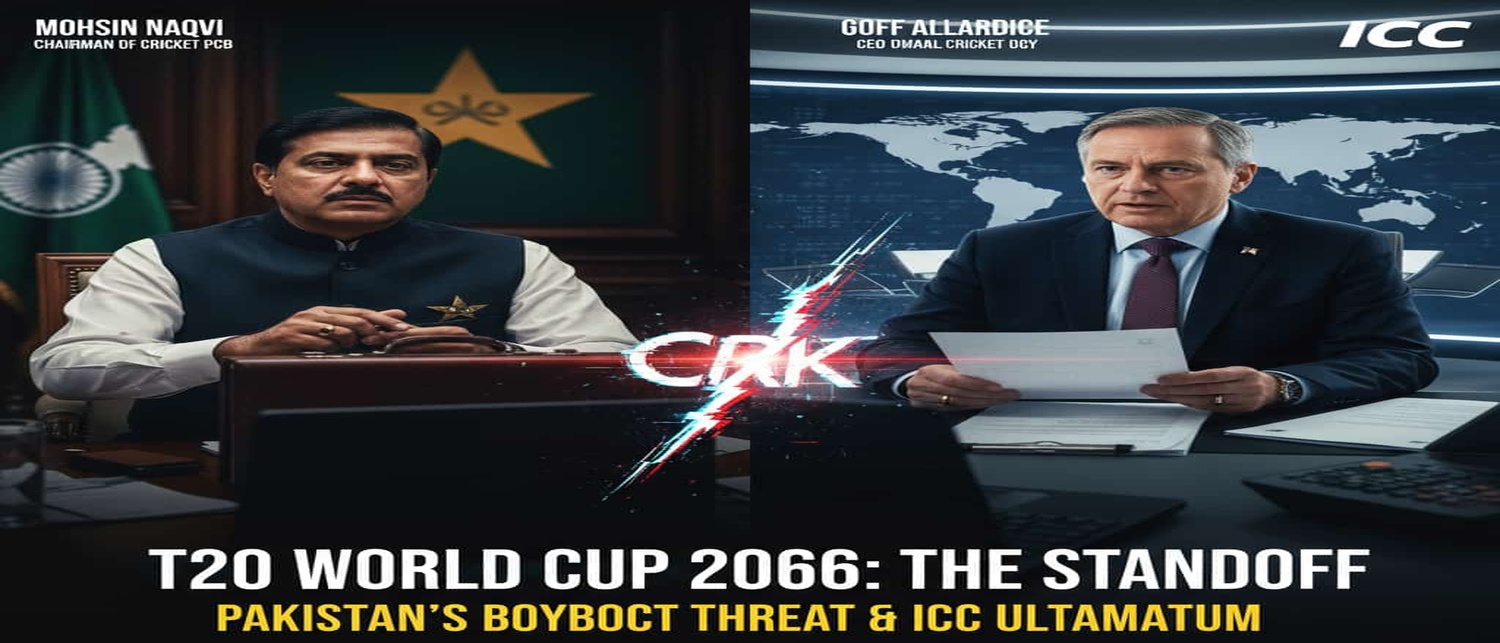
Pakistan is considering withdrawing from the upcoming T20 World Cup 2026, which starts on February 7 in India and Sri Lanka. PCB Chairman Mohsin Naqvi has made it clear that the final decision rests with Pakistan's government, particularly Prime Minister Shahbaz Sharif.
The controversy erupted after the International Cricket Council (ICC) removed Bangladesh from the tournament. Bangladesh had refused to play their matches in India, citing security concerns. When the ICC rejected their demands and replaced them with Scotland, Pakistan stood in solidarity with Bangladesh and accused the ICC of "double standards."
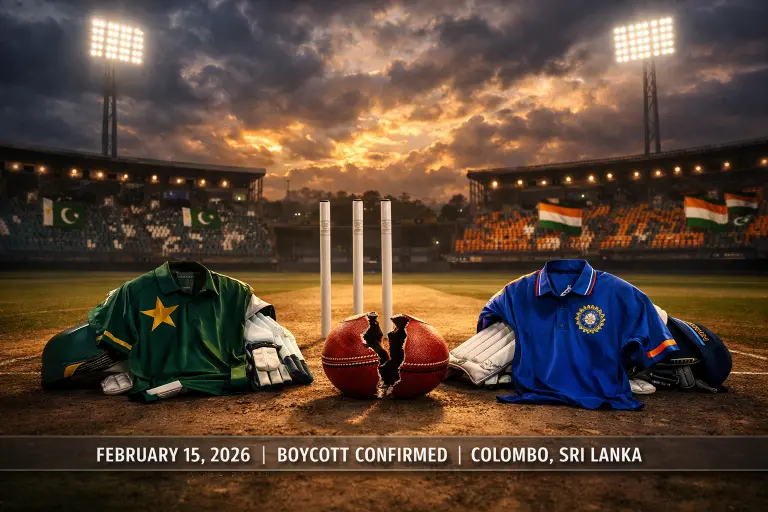
Now, Pakistan has two options on the table: boycott the entire tournament or specifically skip their high-profile match against India scheduled for February 15 in Colombo.
Why is Pakistan Considering the Boycott?
The reasons behind Pakistan's potential boycott are both political and emotional:
1. Support for Bangladesh
Pakistan was the only cricket board to back Bangladesh's demand for relocating their matches from India to Sri Lanka. When the ICC refused and kicked Bangladesh out, Pakistan felt their neighbor was treated unfairly.
2. Claims of ICC "Double Standards"
Mohsin Naqvi, who also serves as Pakistan's Interior Minister, accused the ICC of favoritism toward India. He pointed out that Pakistan was allowed to play all their matches in Sri Lanka under a "hybrid model," but Bangladesh wasn't offered the same arrangement.
3. Deteriorating India-Bangladesh Relations
The political tensions between India and Bangladesh worsened after the Board of Control for Cricket in India (BCCI) asked Kolkata Knight Riders to drop Bangladesh pacer Mustafizur Rahman from their IPL 2026 squad—a move many saw as politically motivated.
4. Broader India-Pakistan Tensions
The arch-rivals haven't played a bilateral series since 2012-2013. Their matches are now limited to ICC events, and every encounter is politically charged. The latest military conflicts and diplomatic standoffs have only deepened the divide.
Official PCB and ICC Stance: What Are They Saying?
PCB's Position
Mohsin Naqvi has been vocal but cautious. After meeting with Prime Minister Shahbaz Sharif, he tweeted: "Briefed him on the ICC matter, and he directed that we resolve it while keeping all options on the table. The final decision will be taken either on Friday or next Monday."
The PCB has announced Pakistan's squad for the tournament, which includes stars like Babar Azam and Shaheen Afridi. However, officials have hinted that Pakistan might wear black armbands or make symbolic protests even if they do participate.
ICC's Response
The ICC is not backing down. According to multiple reports, the world governing body has warned Pakistan of severe sanctions if they pull out. These include:
- Suspension from ICC and Asia Cup tournaments
- No foreign players in Pakistan Super League (PSL) – the ICC can deny No Objection Certificates (NOCs) to overseas players
- Financial penalties – Pakistan would forfeit participation fees estimated at $500,000, plus additional revenue clawbacks
- Suspension of bilateral series – Pakistan could be banned from playing international cricket outside ICC events
An ICC source was quoted saying: "If Pakistan also decides not to play the T20 World Cup, the ICC will impose a series of sanctions, including no bilateral series with any international team, no NOC for foreign players in PSL, and no Asia Cup participation."
The ICC has also reportedly kept Bangladesh on standby. If Pakistan withdraws, Bangladesh could be brought back into the tournament, ironically fulfilling their original demand.
Impact on the India vs Pakistan Match
The India vs Pakistan clash on February 15 at Colombo's R Premadasa Stadium is the most anticipated match of the tournament. This fixture is cricket's biggest rivalry and a commercial goldmine.
For Fans
Imagine the heartbreak. Millions of fans—from Mumbai to Karachi, from London to Dubai—have been counting down to this match. A boycott would deny cricket lovers their most-awaited showdown since the heated Asia Cup 2025 encounters.
For Broadcasting Giants
India-Pakistan matches generate massive viewership. Broadcasters pay premium prices for rights, and advertisers line up for commercial slots. A boycott would be a financial disaster for networks that have already invested heavily in the tournament.
For ICC Revenue
The ICC stands to lose the most. The India-Pakistan match drives sponsorships, ticket sales, and global interest in the tournament. Without this marquee fixture, the entire T20 World Cup loses its biggest selling point.
Some experts estimate that the India-Pakistan match alone contributes 30-40% of the tournament's total commercial value.
Effect on Fans, Broadcasters, and ICC Revenue
Fans' Emotional Toll
Cricket fans, especially in the Indian subcontinent, live for India-Pakistan matches. These games transcend sport—they're cultural events. Social media buzzes for days, offices declare informal holidays, and streets empty out during the match. A boycott would leave fans devastated and angry.
Broadcaster Losses
Star Sports, Zee, and other broadcasters have paid astronomical sums for T20 World Cup rights. The India-Pakistan match is their crown jewel. Without it, ad revenues plummet, and viewership drops significantly. They could potentially demand compensation from the ICC for the loss of such a high-value fixture.
ICC's Financial Crisis
The ICC distributes revenue to member boards based on tournament participation and performance. If Pakistan withdraws, the entire revenue model gets disrupted. Sponsors like Coca-Cola, Emirates, and others might renegotiate contracts. The ICC could lose millions of dollars, affecting cricket development worldwide.
Pakistan Cricket's Suffering
Pakistan cricket would suffer the most. The PCB would lose ICC revenue, PSL would struggle without foreign stars, and sponsors would pull out. Players would miss prize money and global exposure. Pakistan's isolation from international cricket could set their game back by years.
Possible Outcomes and Future Scenarios
Scenario 1: Pakistan Plays
Most experts believe Pakistan will ultimately participate. The ICC sanctions are too severe. Pakistan's cricket team would be crippled without PSL foreign players and ICC revenue. The government may decide that the symbolic gesture isn't worth the long-term damage.
Scenario 2: Pakistan Boycotts Only India Match
Some reports suggest Pakistan might skip just the India game as a targeted protest. This would cost them two group points but send a strong political message. However, the ICC would still impose penalties, though perhaps less severe than a full boycott.
Scenario 3: Full Tournament Boycott
This is the nuclear option. Pakistan withdraws completely, Bangladesh returns, and Pakistan faces years of isolation. The PSL collapses, players' careers suffer, and Pakistan becomes a cricket pariah. This seems unlikely but remains possible given the political pressures.
Scenario 4: Symbolic Protest
The middle ground: Pakistan plays but wears black armbands, makes statements before matches, or protests in other ways. This allows them to show solidarity with Bangladesh without destroying their cricket future.
Expert Opinion and Public Reaction
Cricket Experts
Former players and analysts are divided. Some appreciate Pakistan's solidarity with Bangladesh, while others call it political grandstanding that will hurt cricket. Many believe the PCB is caught between government pressure and cricket reality.
BCCI Vice-President Rajeev Shukla criticized Pakistan for "provoking Bangladesh" and "unnecessarily intervening" in the matter.
Social Media Buzz
Twitter and Instagram are exploding with opinions. Indian fans are mostly dismissive, saying Pakistan is bluffing. Pakistani fans are torn between national pride and love for cricket. Bangladeshi fans appreciate Pakistan's support but worry about being used as a political pawn.
General Public Sentiment
Most cricket lovers, regardless of nationality, just want to see the match happen. They're tired of politics ruining the game. The India vs Pakistan clash is bigger than any controversy, and fans on both sides desperately hope their governments won't take it away.
What This Means for Cricket's Future
If Pakistan boycotts—partially or fully—it sets a dangerous precedent. Cricket is already plagued by political interference. The India-Pakistan rivalry has become a victim of geopolitics, with matches dependent on diplomatic relations rather than sporting calendars.
The T20 World Cup should be about cricket, not politics. But with each controversy, that ideal seems further away. If Pakistan pulls out, it won't just affect this tournament—it could reshape how international cricket handles political disputes for years to come.
Final Thoughts
As of now, Pakistan's participation in the T20 World Cup 2026 remains uncertain. The PCB will announce its final decision by February 2, just five days before the tournament begins and thirteen days before the India vs Pakistan match.
The stakes couldn't be higher. For Pakistan cricket, it's a choice between solidarity and survival. For fans worldwide, it's about whether we'll get to witness cricket's greatest rivalry. For the ICC, it's a test of governance and enforcement.
One thing is certain: whether Pakistan plays or boycotts, this controversy has already left a scar on the T20 World Cup 2026. Cricket, once again, has been caught in the crossfire of politics.
Let's hope sanity prevails, and on February 15, we see India and Pakistan battle it out on the field—where this rivalry belongs.
Comments (42)
Great analysis! I think the toss will be crucial. If India bats first and puts up 300+, it's game over for NZ.
Don't underestimate the Black Caps! We've won in India before. Williamson's leadership will make the difference.